


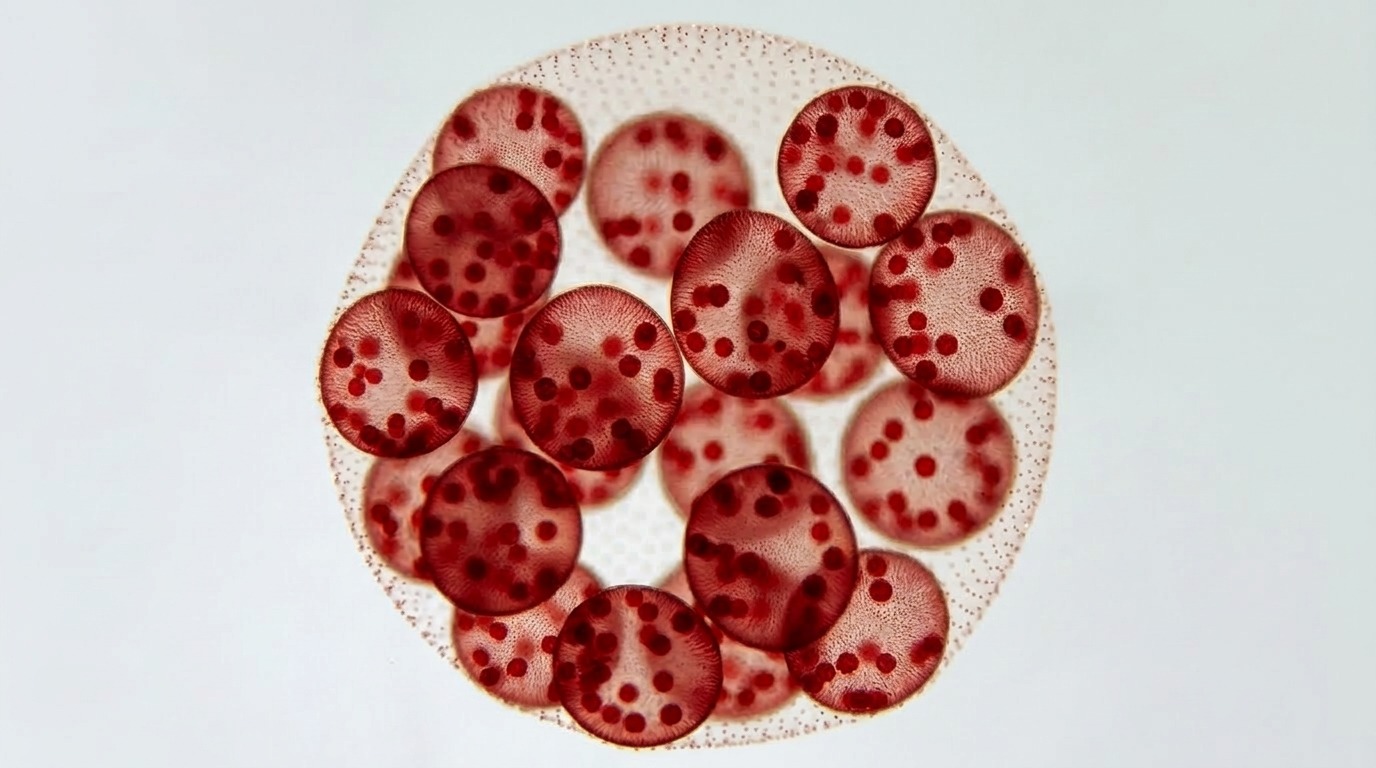
In recent years, ingredients derived from marine environments have gained significant interest in the cosmetic industry. Among them, microalgae stand out as one of the most promising sources of bioactive compounds for skin care.
These photosynthetic microorganisms have evolved over millions of years in environments with extreme conditions such as intense solar radiation, salinity fluctuations, oxidative stress, and temperature variations. To survive, they have developed complex defense systems based on the production of polysaccharides, antioxidants, pigments, and secondary metabolites with remarkable biological activity.
Thanks to advances in biotechnology, it is now possible to cultivate microalgae under controlled conditions and harness these compounds as functional ingredients in cosmetic formulations.
What are microalgae?
Microalgae are unicellular photosynthetic organisms capable of growing in both freshwater and marine environments. They exhibit a remarkable ability to adapt to diverse environmental conditions.
It is estimated that between 200,000 and 800,000 species of microalgae exist worldwide, although only around 35,000 have been studied to date.
Unlike macroalgae (the visible seaweeds found along coastlines), microalgae are microscopic and display a wide metabolic diversity, allowing them to synthesize a variety of metabolites with structural and protective functions.
These metabolites play a key role in microalgae survival, enabling them to protect against UV radiation, prevent dehydration, and neutralize reactive oxygen species.
These same properties can be leveraged in cosmetics to protect the skin against environmental stressors associated with skin aging, such as oxidative stress, pollution, and barrier disruption.
The cosmetic potential of microalgae
The interest in microalgae within the cosmetic industry is mainly driven by two factors: their biological activity and their sustainable origin.
Source of bioactive molecules
Microalgae produce compounds capable of acting on multiple biological mechanisms of the skin, including:
- Polysaccharides with hydrating properties
- Amino acids and bioactive peptides
- Pigments with antioxidant activity
- Lipids and fatty acids
- Molecules that reinforce the skin barrier
- Anti-inflammatory and cell-protective compounds
These properties enable the development of multifunctional cosmetic ingredients, providing benefits such as deep hydration, protection against oxidative stress, and improved skin elasticity.
Sustainable production
Beyond their functional benefits, microalgae offer clear environmental advantages.
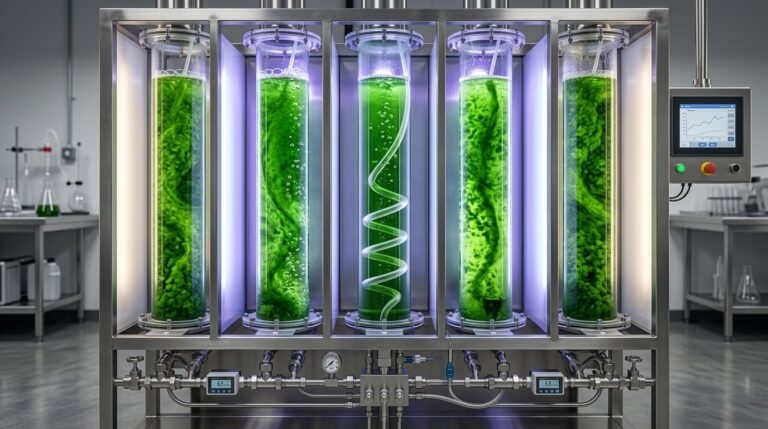
They can be cultivated in closed photobioreactors using light, water, and basic nutrients, without the need for agricultural land or pesticides. This type of production ensures full traceability and reduced environmental impact, aligning with current trends in sustainable cosmetics and blue biotechnology.
AcquaSea®: The Power of Porphyridium cruentum in Cosmetics
AcquaSea® is derived from the red microalga Porphyridium cruentum, known for its ability to thrive in demanding environmental conditions. As an adaptive mechanism, this microalga synthesizes protective compounds capable of forming hydrating matrices around its cells.
Porphyridium cruentum produces extracellular sulfated polysaccharides (EPS), composed of monosaccharides such as xylose, galactose, and glucose. These macromolecules have a high affinity for water and can form bioadhesive structures that interact with the skin surface.
The extract is obtained through controlled cultivation of the microalga in closed photobioreactors, followed by mechanical separation and aqueous extraction processes.
This process does not use potable water, does not generate polluting effluents, and avoids the use of animal-derived raw materials, aligning with blue biotechnology principles and environmental impact reduction strategies.
Additionally, the extraction process relies on mild technologies designed to preserve the functionality and purity of the polysaccharides.
Thanks to its ecological origin and proven efficacy, extracellular polysaccharides derived from Porphyridium cruentum represent an advanced cosmetic solution aligned with current trends in natural, vegan, and science-backed cosmetics.
How does AcquaSea® work on the skin?
AcquaSea® acts at multiple levels of the skin due to its high content of extracellular sulfated polysaccharides, providing multifunctional skin care benefits. Its efficacy has been evaluated through both in vitro and in vivo studies, showing favorable results.
Deep hydration
The polysaccharides in AcquaSea® exhibit a strong water-retention capacity and form a bioadhesive matrix on the stratum corneum, helping to improve skin hydration and reduce transepidermal water loss (TEWL).
Studies have shown a 30.8% reduction in TEWL after 3 hours, indicating a significant improvement in barrier function.
In vivo studies also demonstrated a 32% increase in skin hydration and an 18% reduction in sebum production, supporting overall skin balance.
Antioxidant protection
The sulfated structure of these polysaccharides provides antioxidant activity, capable of neutralizing reactive oxygen species and protecting skin cells from oxidative damage associated with aging.
In vitro studies showed a 22.5% reduction in free radical formation, along with decreased expression of pro-inflammatory cytokines (IL-6, TNF-α).
Skin regeneration
In addition to its hydrating effect, AcquaSea® can stimulate fibroblast activity and modulate enzymes involved in extracellular matrix degradation, such as elastase and hyaluronidase.
Clinical studies reported a 14% improvement in skin elasticity after 28 days of use.
Protection against pollution
The polysaccharides form a protective film on the skin surface, acting as a barrier against environmental pollutants and volatile compounds present in urban environments.
Innovative actives for skin care
Microalgae represent one of the most promising biotechnological platforms for the development of innovative cosmetic ingredients. Their ability to produce bioactive molecules, combined with sustainable production through controlled systems, makes them a strategic source for the future of cosmetics.
At Ismael Quesada Personal Care, we focus on innovative actives capable of transforming cosmetic formulations. AcquaSea® is part of our portfolio of functional ingredients designed for skin care and protection. If you would like to learn more about this ingredient or explore its application in new formulations, our team will be happy to assist you.
References
Chinjoo, N., & Golzary, A. (2025). Microalgae: revolutionizing skin repair and enhancement. Biotechnology Reports, 47, e00911. https://doi.org/10.1016/j.btre.2025.e00911
Martínez-Ruiz, M., Martínez-González, C. A., Kim, D., Santiesteban-Romero, B., Reyes-Pardo, H., Villaseñor-Zepeda, K. R., Meléndez-Sánchez, E. R., Ramírez-Gamboa, D., Díaz-Zamorano, A. L., Sosa-Hernández, J. E., Coronado-Apodaca, K. G., Gámez-Méndez, A. M., Iqbal, H. M. N., & Parra-Saldivar, R. (2022). Microalgae Bioactive Compounds to Topical Applications Products—A Review. Molecules, 27(11), 3512. https://doi.org/10.3390/molecules27113512